
Blog
Winter Is Coming: The 3-Zone Entrance Matting System That Stops Snow, Salt, and Slush Before It Reaches Your Floor

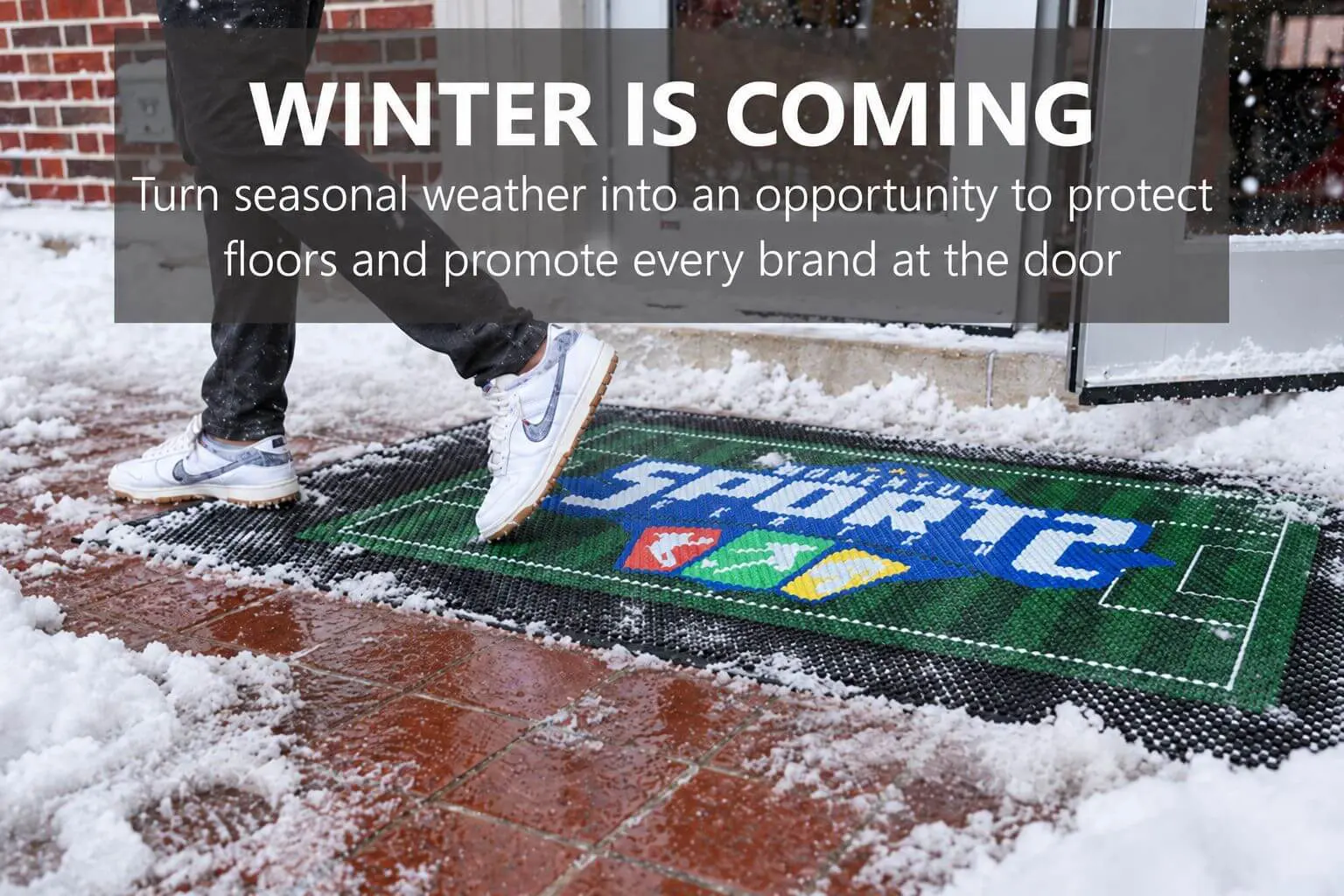

Every year around this time I get the same email from facilities managers and office administrators: “Our lobby floor is destroyed. What do we do?”
By the time that email hits my inbox in January, the damage is already done. Salt has eaten the finish off the tile. Slush has soaked into the carpet. Someone slipped on the polished stone at the entrance, and now insurance is involved.
Winter floor damage is not caused by winter. It’s caused by the wrong entrance system running into winter.
Here’s the good news: about 80% of the dirt, moisture, and salt that ends up on your commercial floors is tracked in on shoes. That means it can be stopped at the door — not most of it, almost all of it — if you build the right three-zone system.
After nearly 40 years of designing custom entrance mats for offices, hotels, hospitals, schools, banks, churches, and government buildings across all 50 states, this is the setup I recommend for any business heading into a real winter.
Zone 1 — Outside the Door: SuperScrape Impressions
The first job of a winter entrance system is aggressive scraping. Snow compacts under shoes. Salt crystals grind into treads. Ice-melt pellets stick in the grooves of every winter boot. If you don’t scrape that off before people step inside, it goes right onto your floors.
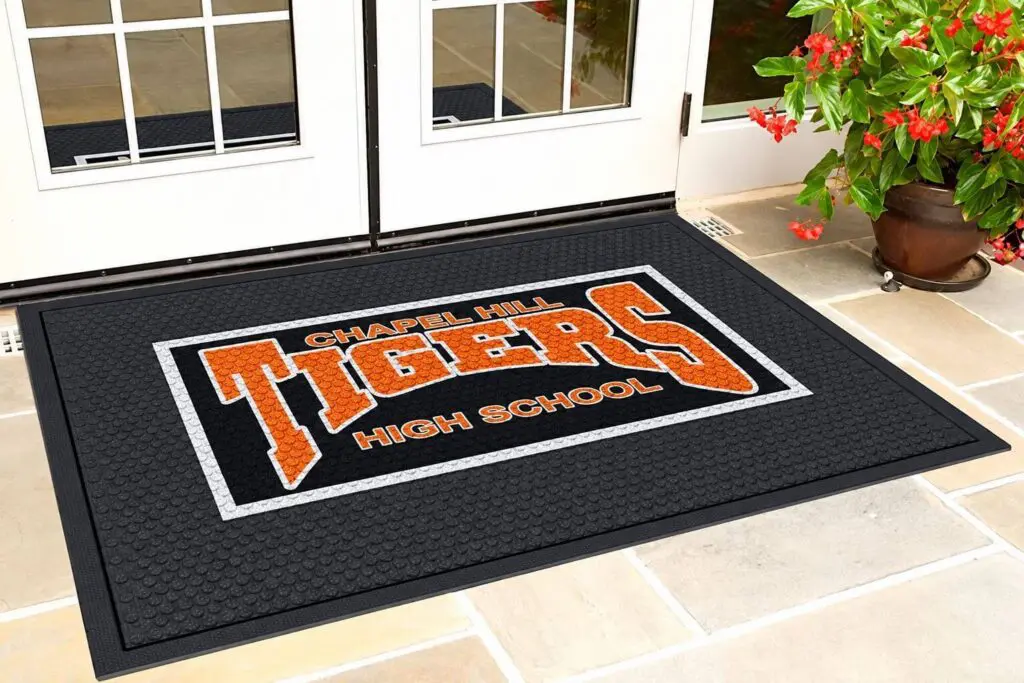
SuperScrape Impressions is a heavy rubber mat with circular molded cleats across the entire surface. Those cleats are aggressive — they scrape mud, snow, and grit off shoe soles the same way a boot scraper does. It’s built for outdoor commercial use, holds up to freeze-thaw cycles, and can be printed with your logo so the entrance stays branded even before customers step inside.
This is where about 60% of the incoming mess is going to get stopped. Skip this zone and everything else has to work twice as hard.
Best for: Outdoor entrances, covered awnings, parking-lot-facing doors, loading docks, and any high-traffic commercial entry with real winter weather exposure — including school entrances like the Chapel Hill Tigers High School mat shown above.
Zone 2 — In the Vestibule: WaterHog Impressions HD
Once shoes have been scraped, you need to trap the moisture and any remaining fine debris. That’s the job of the second zone.
WaterHog Impressions HD is the industry standard here — and has been for decades. Two things make it different from every other entrance mat on the market:
- The rubber “water dam” border — a molded raised lip around the perimeter that traps moisture inside the mat instead of letting it seep onto your floor. It holds up to 1.5 gallons of water per square yard.
- The nub-and-scraper surface — raised rubber nubs interspersed with polypropylene fibers that scrape and wipe at the same time.
WaterHog Impressions HD also carries the NFSI (National Floor Safety Institute) high-traction certification. That matters legally at any facility where a slip-and-fall claim would be a real event — healthcare, hotels, government, schools.
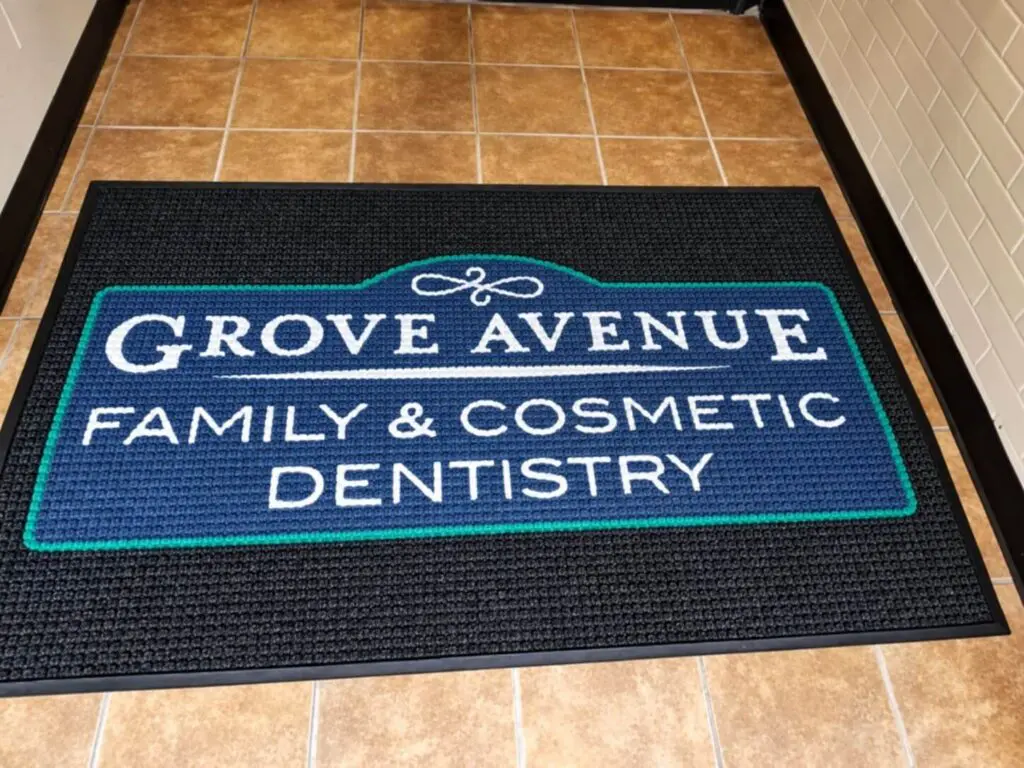
This is your workhorse mat. Custom printed with your logo, it doubles as a first-impression branding surface for anyone walking through — like the Grove Avenue Family & Cosmetic Dentistry mat shown above.
Best for: Vestibules, entry lobbies, covered walk-through zones, and the primary entrance zone of offices, hotels, hospitals, banks, dental practices, and retail storefronts.
Zone 3 — Just Inside: DigiPrint HD
Even after two zones of scraping and wiping, some fine moisture and micro-debris still make it past. That’s where the third zone catches everything the first two miss — and where your brand does its real work.
DigiPrint HD is a high-definition digitally-printed mat with photographic-quality logo reproduction. Full color, unlimited detail, small text legible, gradients and shadows intact. It goes just inside the door — in the lobby, the reception area, the entry to the sanctuary or the classroom hallway.
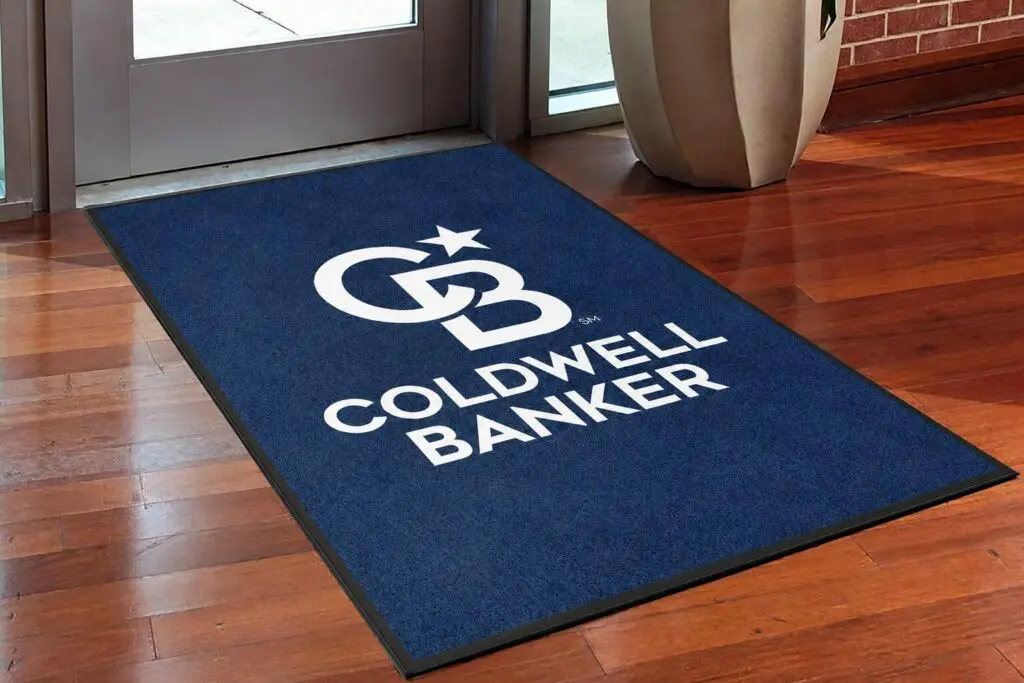
By the time a visitor is standing on Zone 3, their shoes are essentially clean. The mat’s job now is to catch the last traces of moisture and, more importantly, to present your brand at the exact moment their eye is on the floor — like the Coldwell Banker mat shown above.
Best for: Interior lobbies, main reception areas, real estate and law office entries, sanctuary entrances, showrooms, and any first-impression indoor floor space.
The Complete 3-Zone System at a Glance
Total mat run should stretch 12 to 15 feet from outside the door to where a visitor’s foot leaves the mat. That is the distance a shoe needs to fully drop its winter cargo.
Why Fall Is the Time to Build This System, Not January
Every year I see the same pattern. Businesses order winter mats in mid-December, expect them by Christmas, and are surprised when a custom mat with a proofed logo can’t ship overnight.
Custom logo mats are made to order. A free digital proof takes 24 hours. Production runs 7 to 10 business days. Freight adds another 5 to 7. If you place the order in mid-December, you’re not seeing the mats until mid-January — after the first big storm has already done the damage you were trying to prevent.
The right time to build this system is now, in September and October, before the first cold snap.
What Most Businesses Get Wrong
Two mistakes I see over and over:
Mistake 1 — Buying one big mat instead of three zones. A single 8-foot mat inside the front door can’t replace a three-zone scrape-trap-wipe run. Water and salt both need distance and
different surfaces to actually come off the shoe. See our full write-up on why a two-mat (or three-mat) system beats a single mat.
Mistake 2 — Renting the mats instead of owning them. A national uniform rental company will happily “provide” you WaterHog mats on a five-year contract for $12–$25 per week per mat. Buy the same mat outright once and it lasts three to five years with basic vacuuming and occasional hosing off. Rental math only makes sense for businesses with 15+ locations where laundry logistics genuinely matter.
The Bottom Line
Every dollar you spend on a proper three-zone entrance matting system saves five dollars in floor replacement, ten dollars in cleaning labor, and an unpredictable amount in slip-and-fall exposure. And it does it while carrying your brand at the entrance where customers, patients, students, or visitors form their first impression.
Winter is coming. The mats you buy in September will do their work every day from November through March.
Planning a three-zone system for your business, church, school, or facility? Request a free 24-hour digital proof — no minimum order, no artwork setup fee — or email sandy@rugratsva.com. Every email gets a quick reply, usually within the hour during business hours.
— Sandy Pharr, Founder Rug Rats, Inc. · Virginia Beach, VA Woman-owned · WBENC-Certified · WOSB-Certified · Made in the USA since 1987
Frequently Asked Questions
How much dirt does a 3-zone entrance mat system actually stop?
What is the difference between SuperScrape, WaterHog Impressions HD, and DigiPrint HD?
SuperScrape Impressions is a heavy rubber outdoor mat with aggressive circular cleats designed to scrape snow, mud, and grit off shoe soles. WaterHog Impressions HD is a vestibule mat with a rubber water-dam border and a nub-and-scraper surface that traps moisture and wipes shoes clean. DigiPrint HD is an indoor mat with photographic-quality digital logo printing designed for interior lobbies and reception areas.
When should I order winter entrance mats for my business?
Can WaterHog Impressions HD handle heavy snow and salt?
How long does a commercial entrance mat last with heavy winter traffic?
Do I really need three mats, or is one big mat enough?
Does Rug Rats print custom logos on winter entrance mats?

About the author - Sandy Pharr
Sandy Pharr is the founder and owner of Rug Rats Inc., a WBENC-Certified and WOSB-certified woman-owned custom logo rug company based in Virginia Beach, Virginia. Since 1987, Rug Rats has supplied USA-made custom logo mats and branded entrance rugs to businesses, schools, military installations, and government facilities nationwide. View all posts by Sandy Pharr →